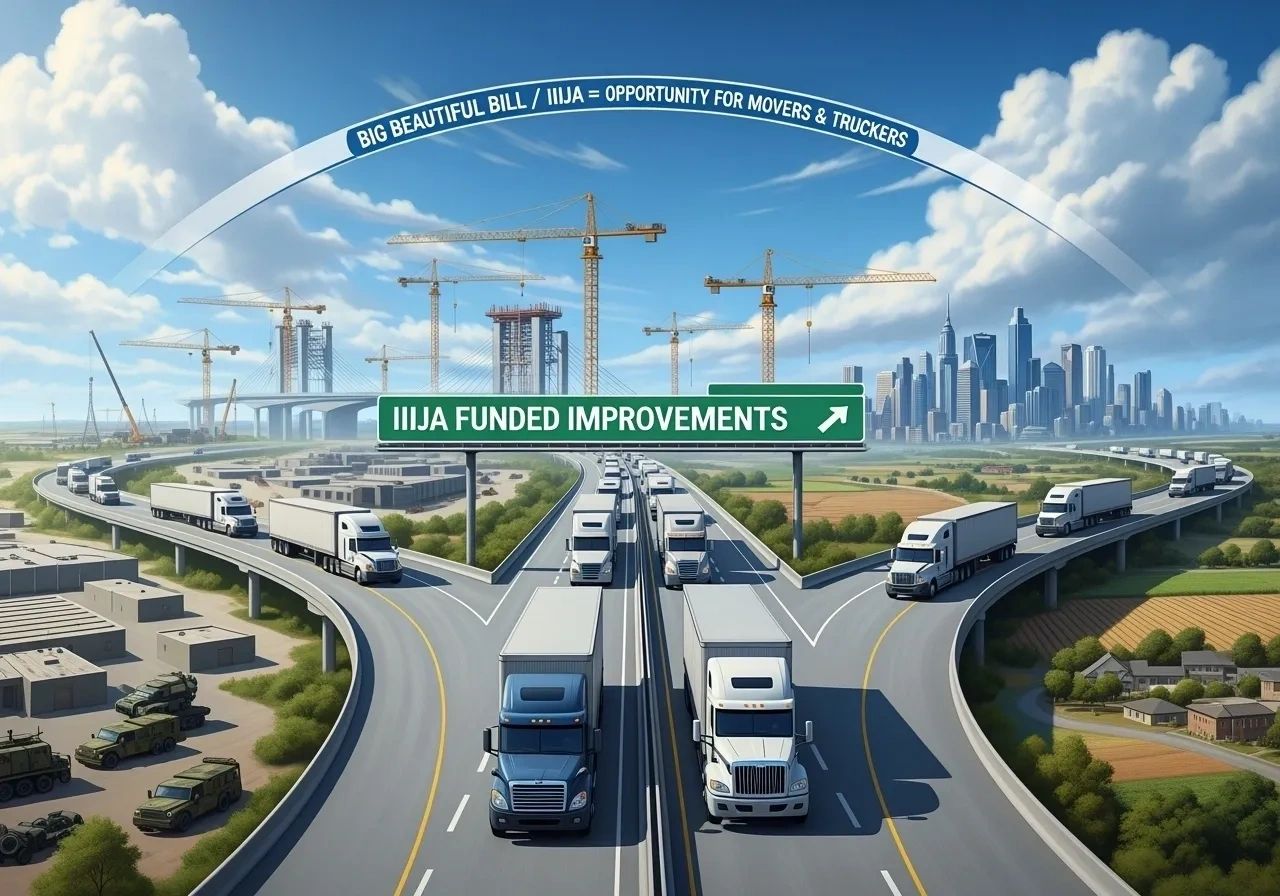
In November 2021, the United States launched one of the most impactful economic catalysts in a generation: the Infrastructure Investment and Jobs Act (IIJA) or Big Beautiful Bill. For professionals in freight hauling, household and commercial moving, or military relocation, the IIJA is not just another government program—it’s a historic investment in your routes, your equipment, and your profits.
Roads and bridges are the veins of America’s supply chain. When those arteries get the attention, repairs, and upgrades they need, businesses that depend on ground transportation notice—with better reliability, improved margins, and a host of opportunities to grow. Here’s how the IIJA is already reshaping the landscape for transportation companies and military movers, and what you can do to put these changes to work for your business.
1. IIJA in Brief: What’s in the Bill for Transportation?

The IIJA authorizes $1.2 trillion in infrastructure investments over five years, with a heavy focus on making America’s roads and bridges safer, smoother, and more resilient. Here’s a closer look at the highway and bridge portion:
- $350 billion allocated to federal highway programs (2022–2026), the biggest such commitment since the 1950s.
- $110 billion specifically set aside for roads, bridges, and major ground transportation.
- Over 15,000 bridges scheduled for repair or replacement across the United States.
What does this mean on the ground? Over the next few years, key freight routes, access roads to logistics hubs, and highways to and from major military installations will see significant construction and improvement. While each state decides how to prioritize projects, the goal is clear: reduce bottlenecks, increase safety, and cut down on lost time and costly breakdowns.
2. Why Truckers, Movers, and Military Movers Should Care
a) Lower Operating Costs & Fewer Breakdowns
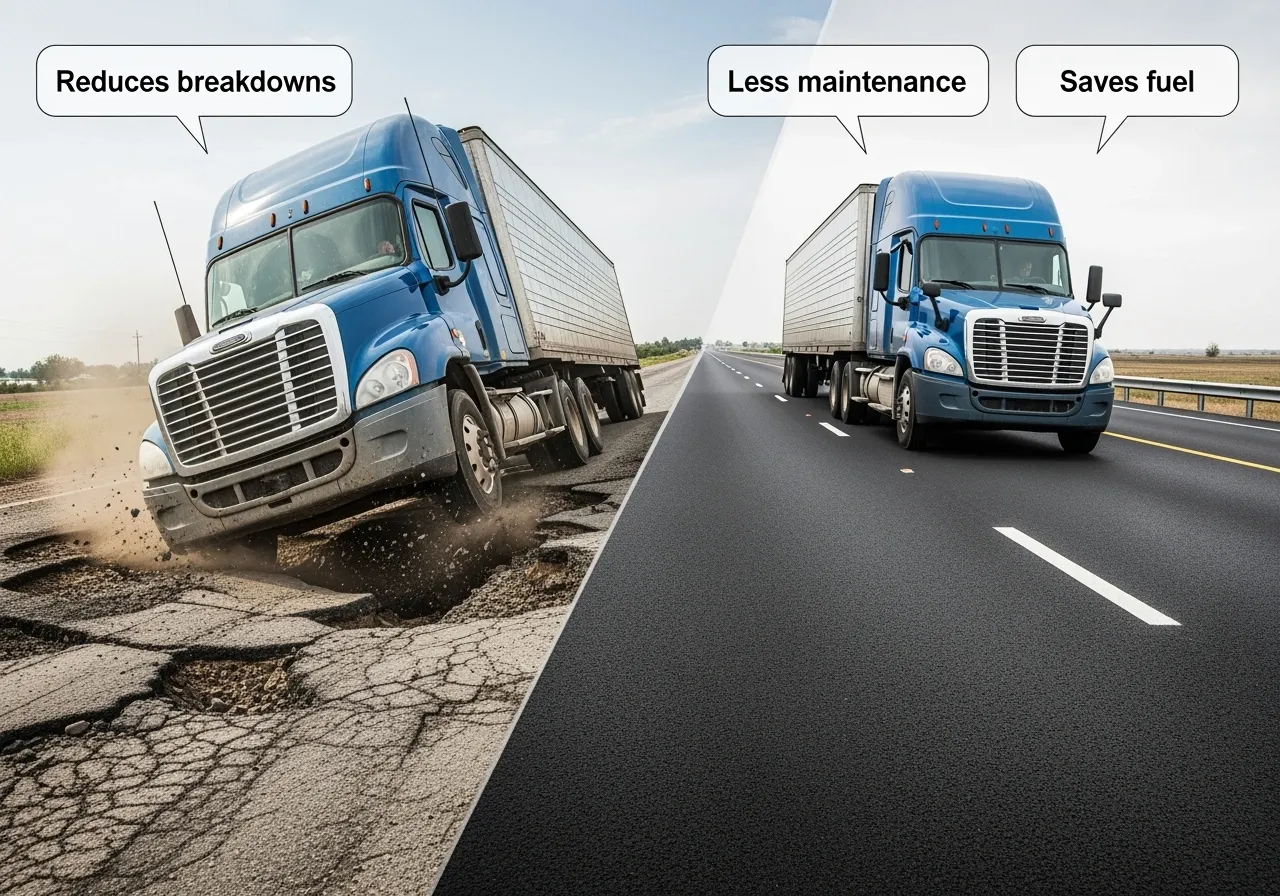
Better roads are not just easier on nerves—they’re easier on equipment.
- Smoother pavement reduces wear-and-tear on suspensions, tires, brakes, and cargo.
- Fewer potholes and surprise bumps mean reduced out-of-pocket maintenance and less time in the shop.
For a long-haul truck that logs 100,000 miles a year, even minor improvements in road quality can lead to significant annual savings on repairs. For moving companies carrying sensitive cargo—furniture, commercial goods, or military families’ prized possessions—good roads lower the risk of in-transit damage and insurance claims.
b) More Predictable Schedules, Less Downtime

Upgrades funded by the IIJA target not just surface quality but also problem spots known for congestion, flooding, or frequent closures. That means:
- Fewer weather and maintenance delays: New drainage systems and upgraded bridge materials lead to fewer weather-related closures.
- Reduced lost hours in traffic jams or detours: Many projects are prioritizing high-traffic freight corridors.
For military movers, improved base access roads mean fewer late arrivals and faster PCS (Permanent Change of Station) moves, a critical benefit during peak moving seasons.
c) Boosted Fuel Economy
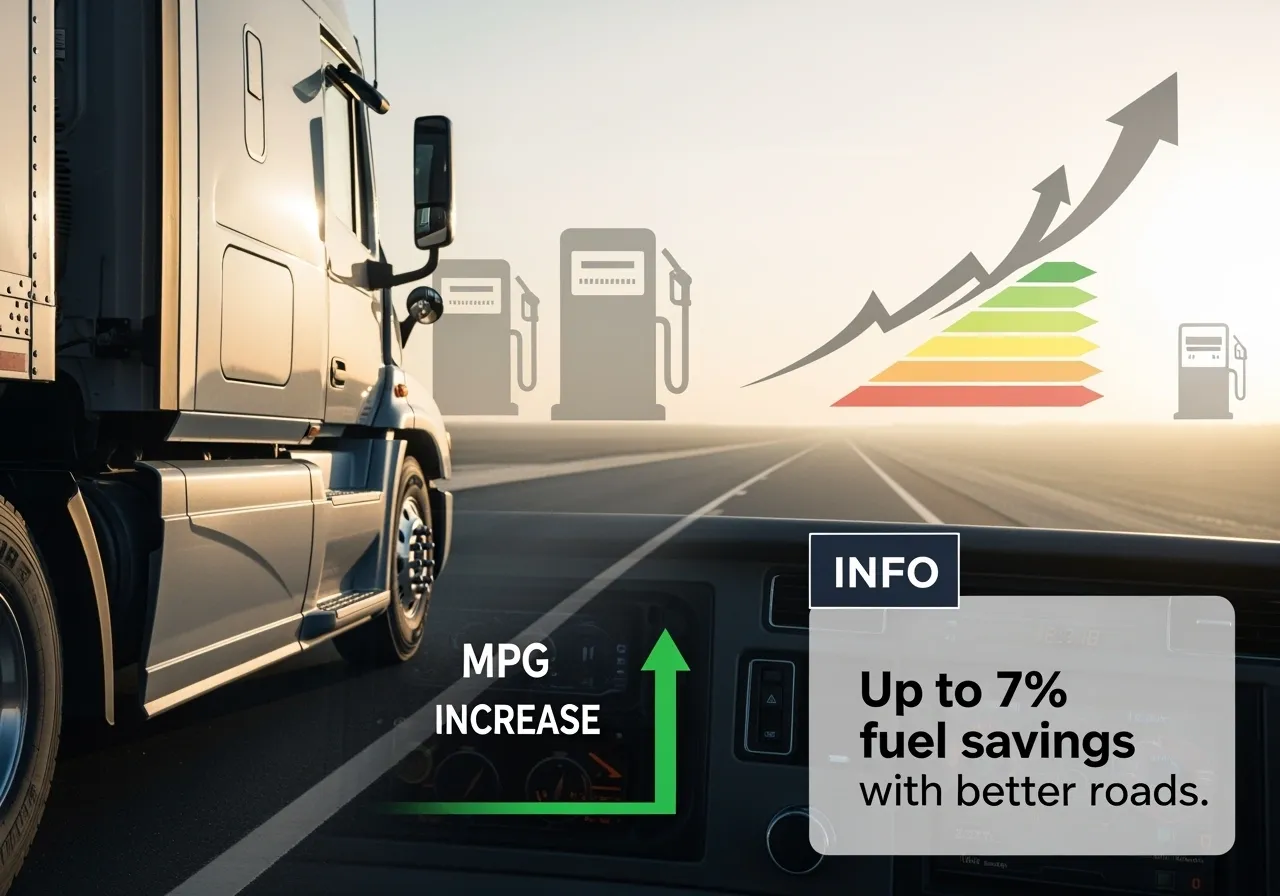
Studies backed by the U.S. Department of Transportation confirm that improved pavement can boost truck fuel efficiency by 3% to 7% compared to worn-down, rough routes. Across a fleet, those savings quickly add up to thousands of dollars a year on fuel alone.
d) New Market Opportunities

As more secondary and regional highways get improved, companies can confidently expand into new service areas—including rural markets, new metropolitan regions, and military bases that were previously harder to access. That’s growth potential you can actually plan for.
3. State Spotlight: Where the Investments Are Happening
Funding flows everywhere, but heavier traffic corridors and states with the most bridge repair needs are getting major resources first. Here’s a snapshot of top states by federal highway and bridge allocations under the IIJA (source: FHWA, IIJA State Apportionments 2022–2026):
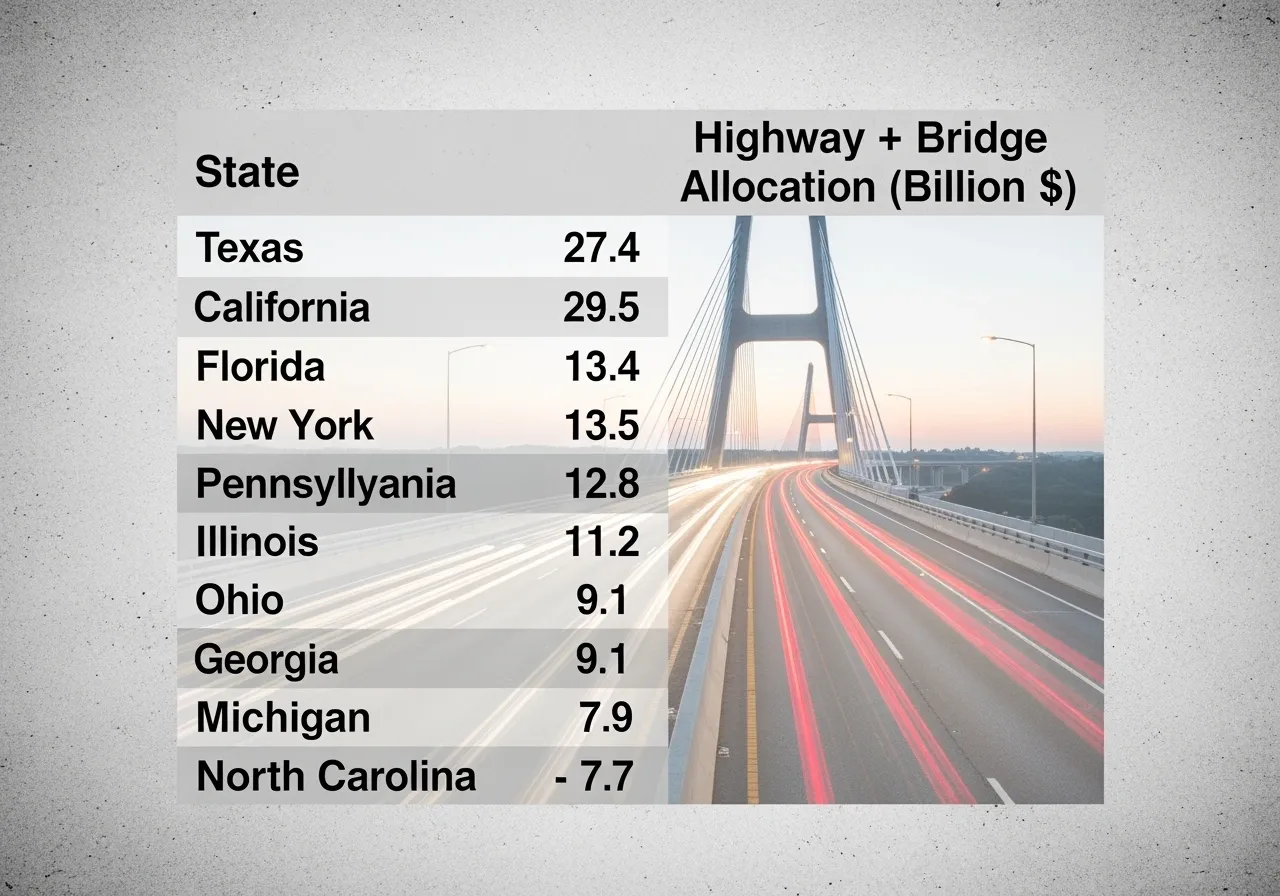
Many high-priority rural freight corridors and connectors to military installations are included as well. If you operate routes in or near these states, expect to see increased construction and—soon—major improvements.
4. Action Steps: How to Capitalize as a Transportation Professional
1. Know the Projects on Your Routes
Use government resources (like the DOT’s online project locator) or ask your industry association about construction timelines in your territory. Don’t wait for surprises—proactively reroute or adjust delivery plans as needed as construction ramps up.
2. Track Pre- and Post-Upgrade Costs
Keep basic records for each vehicle: monthly fuel usage, suspension and tire maintenance, average trip speed, and delay hours. This helps you document real cost savings when roads improve—and negotiate better rates or justify expansion later on.
3. Review Fleet Purchasing Plans
If you were planning a major fleet investment, align it with completed roadwork. Trucks and trailers last longer on new pavement—possibly letting you extend replacement cycles safely, so you buy less often with lower total cost of ownership.
4. Consider Service Area Expansion
As new corridors open up, consider pilot programs in improved areas—especially routes serving military bases, ports, and emerging urban centers. Enhanced infrastructure makes these markets less risky for newcomers.
5. Communicate Improvements to Customers
Make sure clients—shippers, families, or military personnel—know when to expect faster or more dependable service. Improvements to on-time delivery increase satisfaction and can lift your reputation in contract negotiations.
5. How Military Movers Benefit: A Closer Look

Military bases are receiving targeted highway and bridge upgrades to support both logistics and PCS traffic. The IIJA’s focus on improving installation access roads means:
- Faster, more secure transit to/from bases for household goods and commercial deliveries.
- Less risk of damage claims during difficult base approaches.
- More consistent scheduling—especially valuable during the summer PCS rush, when every hour counts for families and crews alike.
For DoD-authorized moving companies or those seeking to expand into the military relocation niche, tracking these base-related improvements can be a winning business move.
6. Why Choose AIG Business Services LLC?

Navigating the profit opportunities created by IIJA takes planning and detailed financial tracking. That’s where AIG Business Services LLC partners with transportation companies:
- Comprehensive cost-tracking: Document infrastructure-related savings and present clear reports for business planning or lender/investor meetings.
- Tax strategy expertise: Identify eligible deductions and credits—like Section 179 expensing or bonus depreciation for new vehicles and infrastructure-driven tech upgrades.
- Growth and cash flow planning: Map out optimal times for equipment investment and market entry based on construction timelines and your own route data.
- Transparent pricing: With our fixed monthly fee, you always know your costs. No retainers, no surprise charges.
Ready to capture your infrastructure dividend? Let us help maximize your gains from America’s infrastructure transformation.
Get started with a free 30-minute discovery call:
📞 +1-(833) 313-4996
✉️ finance@aigbiz.com
AIG Business Services LLC — Starting at $265/month. Financial clarity you need, every mile of the way.
References:
- FHWA, Federal-Aid Highway Program Funding Under IIJA
- FHWA, IIJA State-by-State Allocations
- U.S. Department of Transportation, Research on Pavement and Truck Fuel Efficiency
- Military OneSource, PCS Moving Updates
Let us know when you’re ready to track your savings, document results, and plan for the next phase of your business growth!